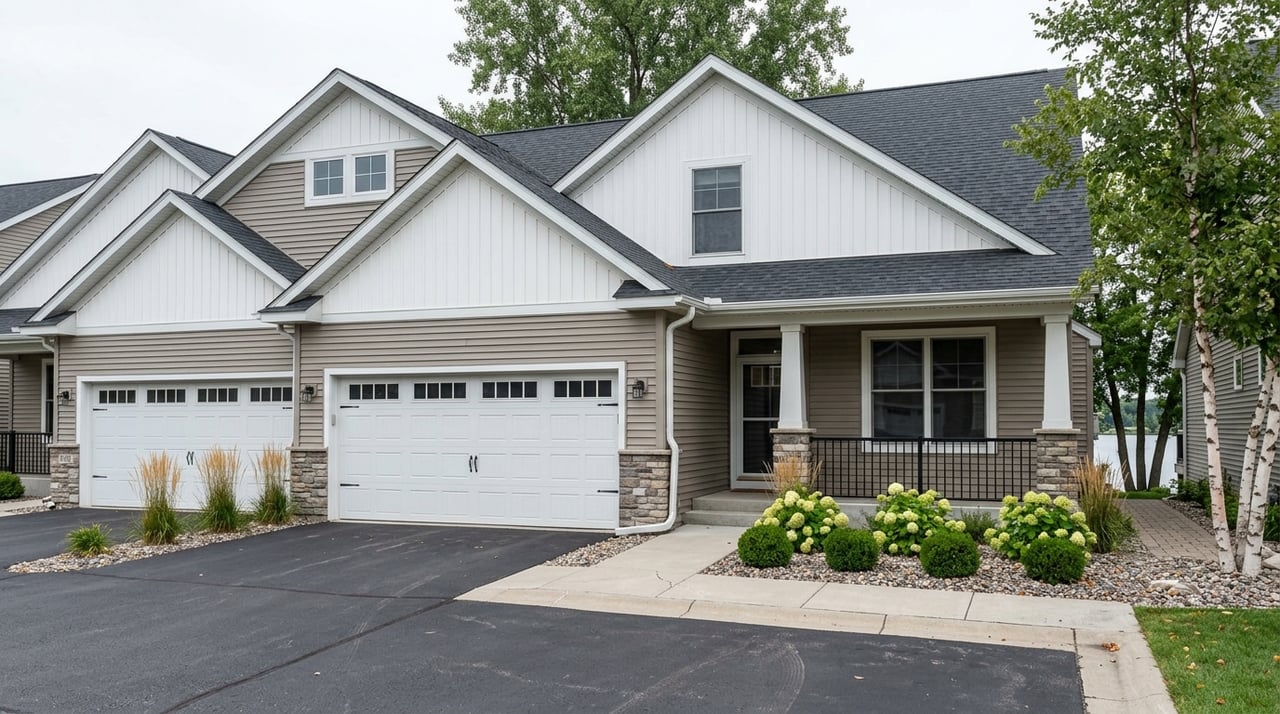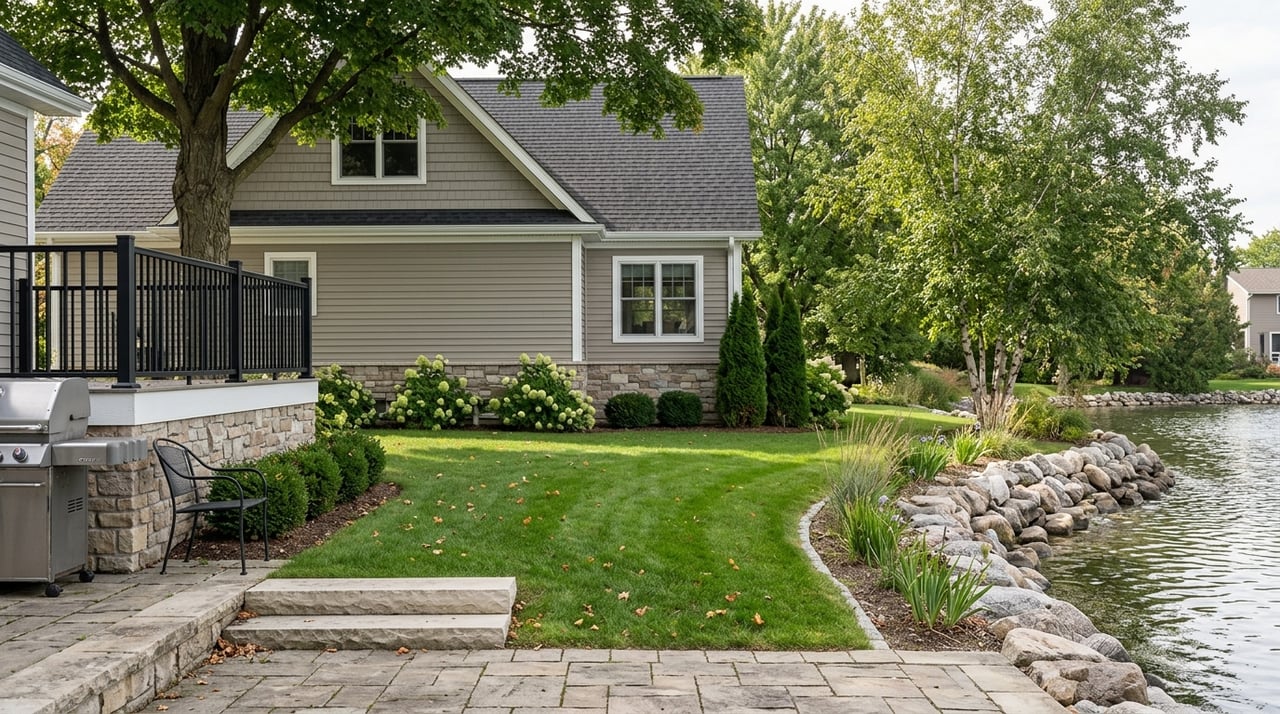
At its September 21 meeting, the Minnetrista City Council heard that the south basin of Whaletail Lake now meets state standards for phosphorus, chlorophyll-a and water clarity, as the Laker/Pioneer reported. On the west end of Lake Minnetonka, the Minnehaha Creek Watershed District's page for Halsted Bay shows its main water quality project as "Status: Planning," with completion expected in 2031.
Both waters are part of Minnetrista's lakeshore market, and both have been listed for excess nutrients. If you're shopping for lakeshore this winter, the difference between them is where each one sits on its published timeline. Whaletail's south basin has finished its treatment. Halsted Bay's plan is still being studied. Every Halsted Bay buyer is buying into that schedule along with the house, and the lakewide price figures a buyer has already seen don't reflect it.
Whaletail's south basin has finished its treatment
Whaletail Lake was added to Minnesota's impaired waters list in 2006 because of excess nutrients, mostly phosphorus. Much of that phosphorus came from the lake's own sediment, which releases it into the water in summer. The south basin was treated with alum in 2023. A second dose followed after sediment testing set the amount. Minutes from the Pioneer-Sarah Creek Watershed Management Commission's September 17, 2026 meeting record that treatment as completed earlier that year.
The project cost just over $562,000. Most of it came from a $405,000 Clean Water Legacy grant through the Minnesota Board of Water and Soil Resources, and the Pioneer-Sarah Creek Watershed Management Commission, the City of Minnetrista, Hennepin County and Three Rivers Park District paid the rest. According to the Laker/Pioneer report, the treatment is expected to cut internal phosphorus loading by about 383 pounds a year and last 15 to 20 years. Since the first treatment, phosphorus has dropped below state standards and the basin has had fewer algae blooms and clearer water. It is expected to come off the impaired list in 2028.
So a Whaletail buyer this winter is buying water that has already been treated, has measured results, and has an expected treatment life measured in decades.
Halsted Bay's restoration has a schedule, and it ends in 2031
The Minnehaha Creek Watershed District calls Halsted Bay the most degraded bay on Lake Minnetonka. The cause is well understood. Dissolved phosphorus reaches the bay in runoff and groundwater from upstream, and MCWD's assessments trace about half of it to Six Mile Creek and the Six Mile Marsh wetland. To meet state standards, the district has to deal with both the water coming down Six Mile Creek and the nutrients the bay releases from its own bottom. In 2025 board material, the district put internal loading at more than 40 percent of the total and the needed reduction at about 2,000 pounds a year.
The options MCWD is weighing include a water treatment facility, wetland restorations upstream and in-lake treatment. The project page lists a cost of $13,175,000. Its fall 2026 update says planning began in 2025 and covers reviewing earlier feasibility work, collecting new data, and starting talks with partners about operations, regulation and funding. The posted timeline has planning ending in 2027, design in 2027 and 2028, construction from 2028 to 2030, and completion in 2031.
In September 2026, MCWD issued a request for proposals for a consultant to reassess whether an off-line treatment facility still makes sense. That facility would pump water out of Six Mile Creek near the downstream end of the marsh, treat it with alum or another chemical, and return it before it reaches the bay, possibly on district-owned land on Farmhill Circle. In-lake alum for Halsted Bay is slated for evaluation after that study.
Work in the area didn't wait for the plan. MCWD's regional carp program ran from 2014 to 2023 and included carp removals in Halsted Bay in July 2019. The district still runs its carp barriers and aeration and monitors water quality and vegetation. Upstream, MCWD's May 2026 update reported construction on the East Auburn Wetland Restoration as recently completed. It restored 11 acres of wetland and is estimated to cut nutrients by 45 pounds a year.
What the schedule means when you make an offer
A Halsted Bay purchase this winter is a purchase of the bay as it is now, plus a plan that is public, carries a $13,175,000 cost estimate, and is years from construction. The district's phosphorus reductions are projections, and no alum has gone into the bay yet. The timeline is useful anyway. It gives a buyer a date to weigh against how long they plan to own.
If you expect to own past 2031, the published completion date falls inside your ownership, and you can follow the project as it moves from planning to design. MCWD runs a Six Mile Creek-Halsted Bay area newsletter for that. If you expect to sell in three or four years, the bay you hand to the next buyer will be in the middle of the 2028 to 2030 construction window if the posted schedule holds. That buyer will be reading the same project page you are. On Whaletail's south basin, the timeline you're buying into starts after the work is done.
The bridges between a Halsted Bay dock and the rest of the lake
On Lake Minnetonka, the boat you can keep matters as much as the water it sits on. Halsted Bay is the lake's westernmost bay. A channel through Priest's Bay was dredged and widened in 1880 for boat traffic into Halsted. Leaving the bay, a boat can also take the back channels through Emerald Lake, Seton Lake and Black Lake to Harrison Bay in the West Arm. From there the West Arm narrows into Coffee Cove, between Fagerness Point and Lord Fletcher's Old Lake Lodge, then into the Coffee Channel and on to Crystal Bay.
The Lake Minnetonka Conservation District publishes approximate vertical clearances for all 20 bridges on the lake, measured at the normal lake level of 929.4 feet. Its table lists these clearances for the bridges named along the routes out of Halsted Bay:
| Bridge, as named by LMCD | Approximate clearance |
|---|---|
| Halsted Bay | 14'11" |
| Emerald Lake | 12'4" |
| Seton Lake | 12'8" |
| Black Lake | 9'9" |
| Coffee | 13'6" |
The district notes that channel depths and slopes vary. The 9'9" Black Lake bridge is the lowest on the back-channel route. Check the height of the boat you own or plan to buy against that number before you settle on a lot. For comparison, the Narrows bridge lists 18'3". For trailer boaters, LMCD lists a public launch with public parking on Halstead Drive in Halsted Bay.
Lakewide price figures don't tell you what Halsted Bay costs
The fall numbers for Lake Minnetonka lakefront come from a different market. Tonka Insider's fall 2026 market update, drawn from NorthstarMLS closed sales of lakefront homes, counts 41 closings from August through October 2026, down from 54 in the same months of 2025. The October median was $3.15 million on 14 sales, compared with $2.00 million on 19 sales in October 2025. Lakefront sellers got about 94 cents per dollar of original asking price this fall. As of November 3, there were 58 lakefront homes for sale on the lake, with a median asking price near $5.1 million and the least expensive listed at $950,000. On October 1, a Deephaven estate closed at $18.25 million, the most ever paid for a Minnesota home, according to the Star Tribune.
Minnetrista's own numbers are much lower. The Minneapolis Area REALTORS Local Market Update for September 2026 shows a median sale price of $824,913, up 17.8 percent from September 2025. That came from 20 closed sales, with an average of 49 days on market, 2.9 months of supply, and 96.1 percent of original list price received. The report itself warns that a single month in a small city can swing hard. Hennepin County's 2026 assessment put Minnetrista's median single-family value at $701,200, up from $673,700 in 2025, with lake and off-lake homes counted together.
A Halsted Bay home falls somewhere between those two sets of numbers, and neither one prices it. The lakewide median follows Deephaven, Wayzata and the deep, clear water of the main lake. The Minnetrista median covers every kind of home sold in the city, and the Tonka Insider update itself describes each bay as its own small market. Comparable sales on the bay itself, along with water quality timing and bridge clearances, are what should set an offer price. Our earlier look at why Minnetrista's new-construction median hides two very different builders shows how far a citywide average can drift from any one kind of property here.
Shared docks on the bay are on the same schedule
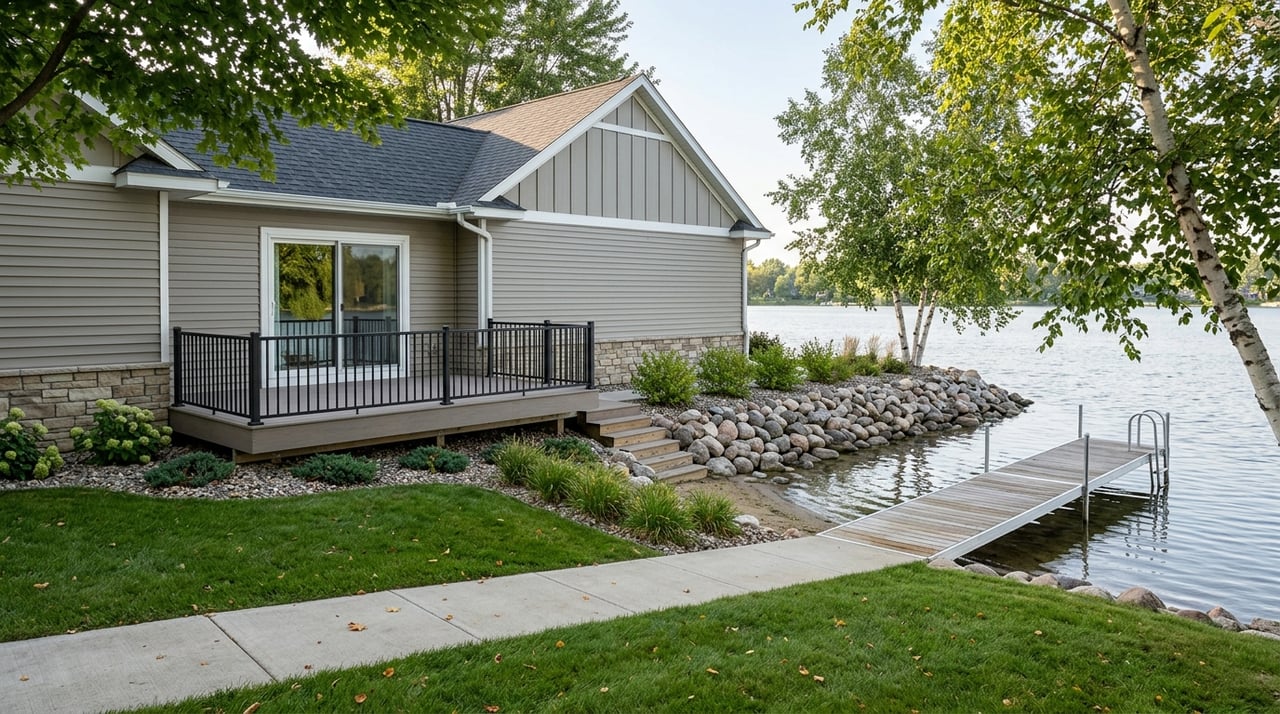
Newer lakeshore around Halsted Bay doesn't always come with private frontage. In an August 4, 2025 council packet, Minnetrista described North Pointe at Halsted Bay as a 60-unit development: 15 detached single-family homes and 45 condominiums, with lake access through a shared amenity building and dock on parcels in Mound. Owning a slip on a shared dock means sharing the bay's water and the bridges out of it with everyone else on that dock. A buyer comparing a shared-dock home with a private lot on another lake is comparing two different restoration schedules.
Questions buyers ask about Halsted Bay
Has Halsted Bay been treated with alum? Not yet. MCWD's current plan studies a treatment facility on Six Mile Creek first, and in-lake alum for the bay is slated for evaluation after that.
When is the Halsted Bay project expected to be finished? MCWD's project page lists 2031 as the anticipated completion, after design in 2027 and 2028 and construction from 2028 to 2030.
Is Whaletail Lake fully restored? The south basin meets state standards and is expected to come off the impaired waters list in 2028. Three Rivers Park District reports that the north basin had already improved enough to meet state standards.
If you're comparing a Halsted Bay dock with Whaletail or the main lake, Local Roots Real Estate is glad to sit down with you over recent sales on the bay, the bridge list and the watershed district's calendar. Start with a free home valuation and neighborhood consultation, or find more about the area on our Minnetrista page.